2026 Top Trends in Stainless Steel Stamped Parts Innovations?
The stainless steel stamped parts industry is evolving rapidly. By 2026, significant innovations are expected to reshape this field. John Smith, a leading expert in the industry, once stated, "Innovation in stainless steel stamped parts is crucial for meeting future demands." His insight highlights the importance of adapting to new technologies and trends.
The emphasis on lightweight design and enhanced corrosion resistance is becoming more prominent. Manufacturers are increasingly focusing on sustainable practices. This shift may lead to a reduction in production waste and energy use. However, some companies still struggle to adopt these new methods fully. Embracing change is vital for staying competitive in the market.
As we look ahead, understanding the top trends in stainless steel stamped parts is essential. The industry's growth hinges on innovation and sustainability. With the right strategies, companies can thrive amidst ongoing challenges. The future is bright, but the journey requires adaptability and foresight.

Emerging Technologies in Stainless Steel Stamped Parts Manufacturing
Emerging technologies in stainless steel stamped parts manufacturing are shaping the industry's future. Advancements in automation are streamlining processes, allowing for faster production rates. These technologies enhance precision and minimize waste. However, reliance on automated systems may introduce new challenges in quality control. Companies must ensure that their machinery is well-maintained and calibrated.
3D printing is revolutionizing design possibilities. It allows for complex structures that traditional methods struggle to achieve. This innovation greatly benefits prototyping and customization. Yet, it raises concerns about production scalability. Balancing efficiency and quality remains a key challenge. Manufacturers must adapt to integrate new techniques without compromising their standards.
Sustainability is another focus. Using recycled stainless steel in production reduces environmental impact. Yet, sourcing materials ethically poses a dilemma for many companies. Transparency in supply chains is crucial. Building trust with clients hinges on ethical practices. The future of stainless steel stamped parts looks promising with innovative approaches. Emphasis on sustainability and technology will drive the industry forward.
Sustainability Trends Shaping the Future of Stainless Steel Components
Sustainability is transforming the landscape of stainless steel components. Many manufacturers now focus on eco-friendly practices. They aim to reduce waste in production. This shift often includes using recycled materials. Involving sourcing and processing methods that lessen environmental impact is essential. The industrial sector faces increasing regulatory pressure to adopt sustainable practices.
Despite advancements, challenges remain. Some processes still rely on fossil fuels. This limits the overall sustainability of stainless steel production. There's a growing interest in renewable energy sources. Solar and wind power can reduce carbon emissions significantly. However, transitioning to these alternatives can be slow and costly for many.
Innovation in design also plays a role. Efficient designs can minimize material waste during production. New techniques in stamping and forming processes enhance efficiency. They help produce lighter, stronger parts. However, balancing durability and sustainability can be difficult. It requires continuous research and collaboration across industries. The journey toward fully sustainable stainless steel manufacturing is ongoing.
2026 Top Trends in Stainless Steel Stamped Parts Innovations
| Trends |
Description |
Impact on Sustainability |
Future Prospects |
| Eco-Friendly Materials |
Use of recycled stainless steel and sustainable sourcing practices. |
Reduces carbon footprint and minimizes raw material extraction. |
Expected to lead to more environmentally-responsible manufacturing. |
| Advanced Coatings |
Development of new surface treatments that enhance durability and resistance. |
Increases the lifespan of products, reducing waste. |
Potential for widespread adoption across various industries. |
| Smart Manufacturing |
Integration of IoT and automation in the production process. |
Optimizes resources and reduces energy consumption. |
Forecasted to increase efficiency and reduce operational costs. |
| Customization Capabilities |
Ability to produce tailored stamped parts to meet specific needs. |
Promotes longevity by ensuring parts are fit for purpose. |
Growing demand for personalized solutions in manufacturing. |
| Life Cycle Analysis |
Assessment of the environmental impact of stainless steel products. |
Informs sustainable practices and product development. |
Expected to become a standard practice in product design. |
Advancements in Design Software for Efficient Stamped Parts Production
In recent years, advancements in design software have transformed the production of stainless steel stamped parts. These innovations enable precise modeling of complex geometries, reducing errors and enhancing overall productivity. Designers can now visualize parts in high detail, allowing for easier adjustments during the design phase. This leads to faster prototyping and a quicker transition to production.
However, not all software tools are created equal. Some may lack the necessary features for specific projects, leading to frustration and inefficiencies. It is vital to choose the right software that aligns with production goals. Training on these tools is equally important, as undertrained staff may struggle with the latest updates or features.
Manufacturers should also be open to feedback. Continuous improvement in design processes often stems from acknowledging limitations. While technology plays a key role, collaboration between engineers, designers, and operators remains essential. The balance of innovative design and practical application will drive the future of stainless steel stamped parts production.
Customization and Personalization in Stainless Steel Stamping Processes
In the evolving landscape of stainless steel stamped parts, customization and personalization are becoming essential. Businesses increasingly demand unique components that reflect specific needs. This shift highlights the importance of adaptable manufacturing techniques. A focus on tailored designs is transforming basic stamping processes into detailed, customized solutions.
Advancements in technology enable manufacturers to incorporate various finishes, textures, and shapes. Innovative machinery can produce intricate designs with precision. For instance, laser engraving allows for unique patterns or logos. These details enhance the aesthetic appeal and functionality of each piece. However, this pursuit of uniqueness may lead to challenges in production efficiency. Striking a balance between customization and speed remains a critical consideration.
Moreover, customer feedback plays a pivotal role in shaping personalized designs. Engaging directly with clients ensures their vision is realized in the final product. Yet, not all customization requests are feasible. Some designs may hinder the structural integrity of the parts. Continuous dialogue is necessary to refine and adapt ideas, ensuring reliability without compromising on creativity.
Market Demands Driving Innovations in Stainless Steel Stamped Applications
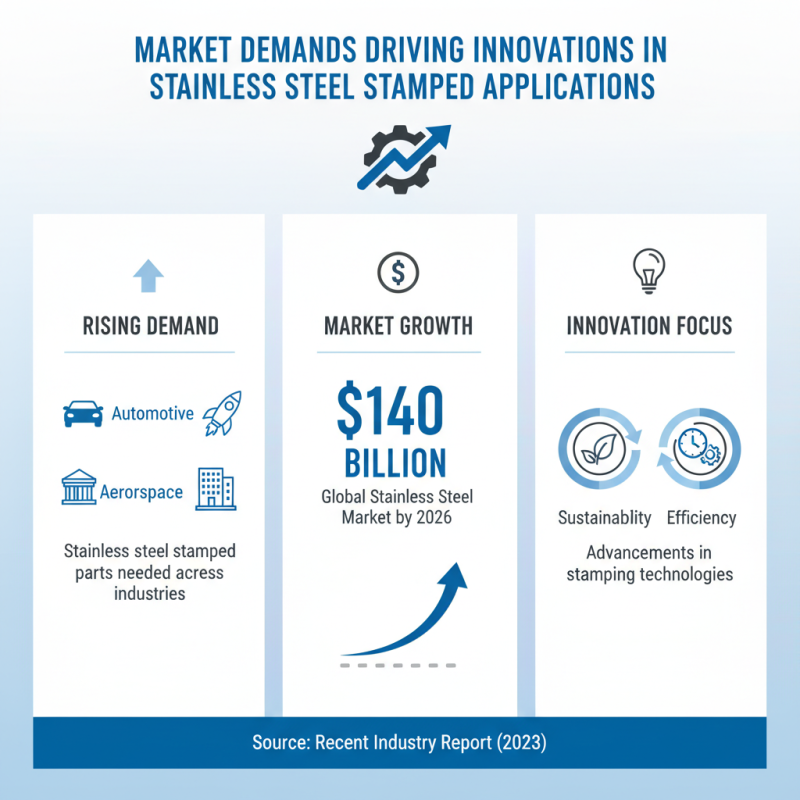
The demand for stainless steel stamped parts is rising sharply, driven by various industries such as automotive, aerospace, and construction. According to a recent report, the global stainless steel market is projected to reach $140 billion by 2026, highlighting the urgent need for innovative manufacturing solutions. Companies are increasingly focusing on efficiency and sustainability, leading to advancements in stamping technologies.
Particularly, the push towards lightweight and durable materials in the automotive sector is shaping trends. Stamped parts are increasingly used to reduce the overall vehicle weight, thus improving fuel efficiency. Reports indicate that reducing vehicle weight by just 10% can enhance fuel efficiency by 6–8%.
Tips: When considering stainless steel for stamping applications, focus on sourcing materials that meet your specific strength and corrosion resistance requirements. Exploring advanced stamping technologies can also help reduce waste during production.
Moreover, as industries shift towards eco-friendly practices, innovations in recycled stainless steel are in demand. Using recycled materials can lower production costs while maintaining quality, supporting sustainable manufacturing goals. Research shows that up to 60% of stainless steel can be sourced from recycled materials.
Tips: Assess your supply chain to include recycled content, which can improve your market appeal and reflect a commitment to sustainability. Engaging with suppliers about their material sourcing strategies can enhance transparency and reliability in your operations.