Best High Temp Gasket Sealant Options for 2026?
High Temp Gasket Sealant plays a crucial role in various industries, especially during harsh operating conditions. According to a recent industry report by Allied Market Research, the global sealants market is projected to reach $32 billion by 2026. This growth highlights the increasing demand for reliable sealing solutions across multiple sectors, including automotive, aerospace, and manufacturing.
In environments exposed to extreme temperatures, using the right High Temp Gasket Sealant is essential. Many manufacturers claim their products withstand temperatures exceeding 500°F. However, results may vary based on application and surface conditions. It is important to consider potential shortcomings and the limitations of each product. A thorough evaluation helps in making informed choices.
Selecting the best High Temp Gasket Sealant can significantly affect performance and durability. In real-world applications, issues like improper surface preparation can lead to seal failures. Therefore, understanding specific needs and product specifications is vital. Only then can one truly appreciate the value of investing in the right sealant.

Best High Temp Gasket Sealant Overview for 2026
High-temperature gasket sealants are essential for various industrial applications. They withstand extreme heat and pressure without compromising performance. Choosing the right sealant can be challenging. Factors like temperature range, chemical resistance, and curing time matter.
In 2026, the options for high-temp gasket sealants broadened significantly. Users often face confusion amid so many choices. Some products claim to handle temperatures up to 500°F or even higher. However, claims do not always match real-world performance. It’s crucial to read reviews and seek recommendations.
Application is another area where errors commonly occur. Proper surface preparation is vital for an effective seal. Roughing up surfaces may enhance adhesion. Still, too much scrubbing can remove essential material. Experimentation may lead to improvements in application techniques. Each situation is unique, and adjustments may be necessary. Users should remain patient and adaptive when applying these sealants.
Best High Temp Gasket Sealant Overview for 2026
This chart showcases the key properties of high temperature gasket sealants anticipated for the year 2026. It illustrates critical metrics such as temperature resistance, cure time, viscosity, elongation, and tensile strength, providing a comparative view of their performance characteristics.
Key Features to Look for in High Temp Gasket Sealants
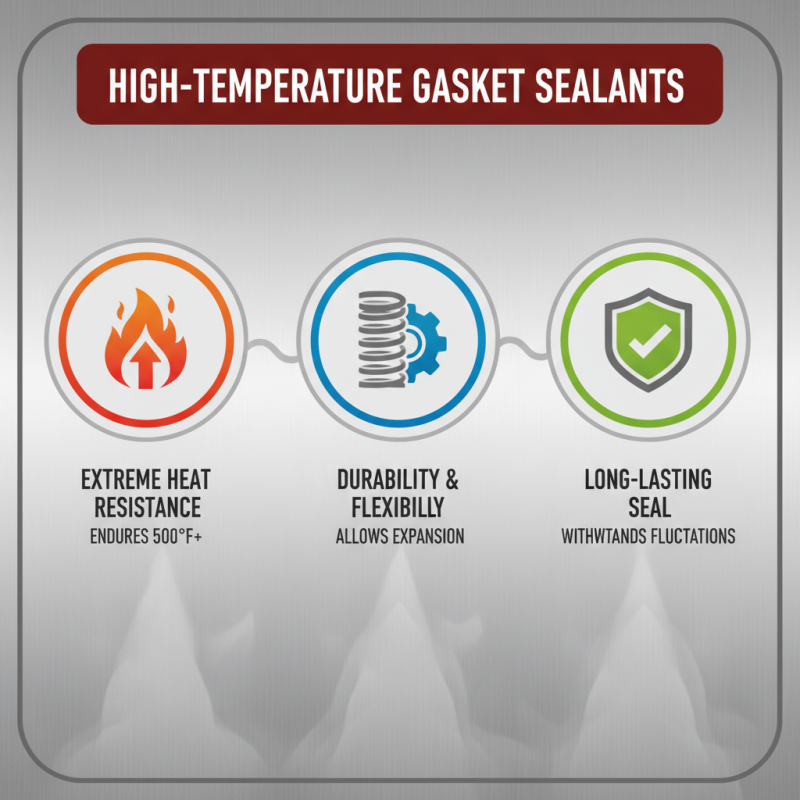
When searching for high temp gasket sealants, consider several key features. High temperature resistance is crucial. Sealants should endure extreme heat without degrading. Products need to withstand at least 500°F. Look for durability and flexibility. A flexible seal allows for expansion and contraction. This ensures a long-lasting, effective seal even in heat fluctuations.
Another important factor is chemical resistance. Many engines and machines involve exposure to fluids. The right sealant must resist oil, coolant, and other chemicals. This resistance prevents leaks and maintains integrity under pressure. Always check compatibility with your specific applications.
Tips: Test a small amount before full application. This helps gauge how the sealant reacts with your materials. Plan for drying times as well. Some sealants take longer to cure than others.
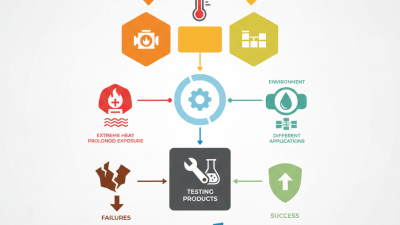
Remember, not every product will perform as expected. Some may dry too quickly or fail under high stress. It's essential to read user reviews and test different options. Every environment is unique; what works well in one situation may not suffice in another.
Top Recommended High Temp Gasket Sealant Brands for 2026
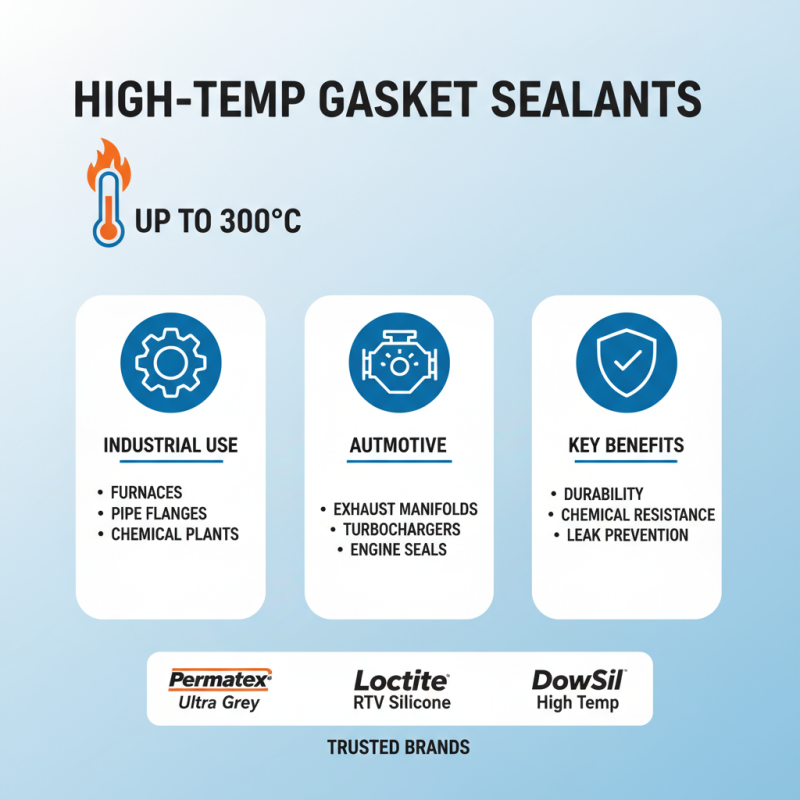
When selecting high-temperature gasket sealants, several brands stand out for their durability and effectiveness. Recent industry reports indicate that sealants designed for extreme heat conditions can endure temperatures up to 300 degrees Celsius. Such high-performance options are critical in automotive and industrial applications. Choosing the right product can often be overwhelming, given the numerous choices available.
The top recommended brands often utilize advanced silicone or anaerobic technologies. These materials are known for bonding power and resistance to thermal expansion. A report from the Adhesive and Sealant Council highlights that sealants with these properties have a failure rate under 5% when properly applied. It’s essential, however, to understand that not all applications require extreme heat resistance. Depending on specific needs, some lower-tier products may suffice but come with trade-offs in performance.
Opting for high-temp sealants isn't always straightforward. Users may find variations in price and claims by manufacturers. The market is flooded with options, yet performance can vary significantly. Understanding application methods is crucial. Many users report issues when sealants are improperly applied. It’s a reminder that quality alone doesn’t ensure success; the process matters.
Application Tips for High Temp Gasket Sealants
When working with high temperature gasket sealants, proper application makes a significant difference. Before starting, ensure the surfaces are clean and free from any debris. A clean area promotes better adhesion and longevity. You may need to use a scraper or solvent to prepare the surfaces. This step is key; neglecting it often leads to seal failure.
Apply the sealant evenly. Use a consistent bead width to avoid weak spots. It’s easy to be rushed and apply too much or too little. Take your time; a careful application can save future headaches. Consider the temperature and environment while curing. High humidity can affect drying times. Keep an eye on the forecast to avoid working in suboptimal conditions.
After applying, press the gasket firmly in place. This helps ensure a tight seal. Allow adequate cure time according to the product instructions. Rushing this process could result in leaks later. If the sealant oozes out, it might mean you used too much. Adjust your technique next time. Each application is a chance to learn and improve.
Comparison of High Temp Gasket Sealant Performance and Durability
Choosing the right high-temperature gasket sealant is crucial for optimum performance and durability.
In high-stress environments, sealants are often exposed to extreme heat and pressure. A study from the Journal of Materials Engineering reported that sealants can lose up to
50% of their effectiveness when subjected to temperatures above 500°F. Understanding the thermal limits of materials
helps in selecting the proper option for your application.
Different formulations boast varying durability levels. For instance, silicone-based sealants typically perform well at high temperatures but may degrade faster than other types when exposed to oils or chemicals.
Another report highlights that newer synthetic options show improved resistance in challenging conditions. These advancements indicate that material science plays a vital role in sealant longevity,
which is essential for machinery operating under high-heat scenarios.
Tips: Always check the thermal limits. Temperatures can vary drastically in real-world applications. Sometimes, seals break down unexpectedly, leading to failures.
Testing different options in controlled settings can help ascertain their longevity under actual conditions. Be prepared for varying performance;
not every sealant will meet its claims in practical use. Adjust expectations accordingly.