Leave Your Message

How to Choose the Right Galvanized Gasket in 2026?

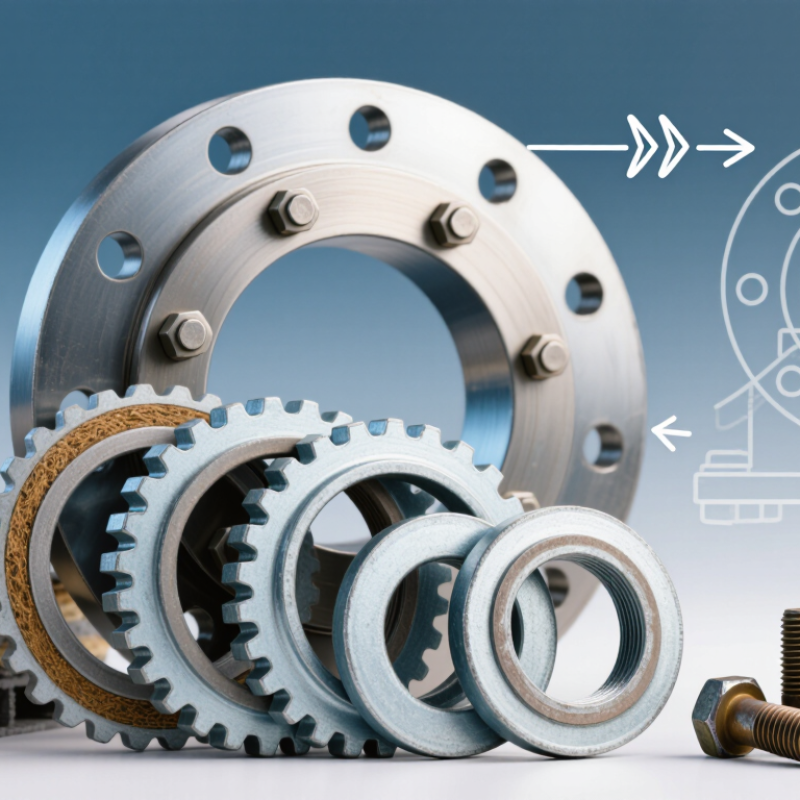
Choosing the right Galvanized Gasket in 2026 requires more than comparing prices or copying an old specification. The correct choice depends on pressure, temperature, fluids, flange design, bolt load, and installation conditions. A gasket that performs well on a clean water line may fail beside salt spray, vibration, or repeated thermal cycling. Small details matter. Think of flange faces, compressed fibers, zinc coating thickness, and the visible condition of the bolts.

Dr. John H. Bickford, a recognized bolted-joint authority, emphasized this practical principle: “A gasket cannot compensate for a poorly designed or poorly assembled joint.” His statement remains highly relevant to Galvanized Gasket selection. The gasket is only one part of a pressure boundary. Uneven tightening can crush the sealing material on one side while leaving a leak path on the other. Contamination can create the same problem.

This guide considers material compatibility, sealing performance, corrosion exposure, temperature range, and long-term maintenance. It also examines how galvanized surfaces behave during storage and installation. Product descriptions can look convincing. They do not replace verified test data. Some recommendations may require adjustment after field inspection, especially where humidity, vibration, or flange damage is present. That uncertainty deserves attention.

A reliable selection process should combine manufacturer documentation, engineering judgment, and installation experience. It should also question assumptions. Is the coating suitable for the environment? Is the gasket thickness appropriate? Will technicians apply the required bolt load consistently? These questions help turn a Galvanized Gasket from a purchased component into a dependable sealing solution.
How to Choose the Right Galvanized Gasket in 2026?

Understanding Galvanized Gasket Materials and Protective Coatings

How to Choose the Right Galvanized Gasket in 2026?
Understanding Galvanized Gasket Materials and Protective Coatings

A galvanized gasket combines a sealing material with a zinc-protected metal component; the exact construction varies by design. Check whether the gasket’s core is steel, and confirm the zinc coating type, thickness, and coverage with the supplier. Bare edges, punched holes, and cut surfaces can corrode sooner than intact coated faces. In its 2016 IMPACT study, NACE International estimated corrosion costs at US$2.5 trillion annually, about 3.4% of global GDP. That broad estimate is a useful reminder: small coating failures can have costly consequences, though it does not predict any gasket’s service life.

Match the coating to the environment, not just the purchase price. Humidity, salt spray, temperature, and contact with dissimilar metals all affect durability. Zinc offers sacrificial protection, but it is not a cure-all; harsh chemicals or sustained heat may require another material or coating. Ask for coating test results and inspect sample edges under good light. A detail that is easy to miss.

Tips: Confirm the gasket’s operating temperature, pressure, and media compatibility against documented product limits. Request coating-thickness measurements and a corrosion-test method, such as salt-spray testing under ASTM B117. Treat test hours as comparative evidence, not a direct forecast of years in service. If conditions vary across the installation, specify the most demanding exposure—and revisit that assumption after inspection.
How to Choose the Right Galvanized Gasket in 2026?

Comparison of ASTM A653/A653M galvanized coating designations. Higher zinc coating mass generally provides a thicker sacrificial barrier, but gasket material, temperature, pressure, fluid compatibility, and joint design must also be verified.

Data basis: ASTM A653/A653M coating designations are expressed as nominal total zinc coating weight on both surfaces. Values shown in grams per square metre are approximate conversions using 1 oz/ft² ≈ 305 g/m². These values describe the protective galvanized coating, not the sealing performance of the gasket itself.

Identifying Pressure, Temperature, and Media Requirements

How to Choose the Right Galvanized Gasket in 2026?
Identifying Pressure, Temperature, and Media Requirements

Start with the operating conditions, not the pipe size alone. Record the normal and peak pressure, including brief surges during startup or valve closure. Note the temperatures at the gasket face, not just the room or ambient temperature. Pressure and heat act together, so a material that appears suitable for each condition separately may still fail under both. Check the gasket maker’s published limits and confirm the exact construction, thickness, and flange style. Small details matter.

Then identify every substance that may contact the gasket: process fluid, cleaning solution, condensate, and occasional flushes. Concentration and exposure time can change compatibility. A diluted chemical during routine operation may become more aggressive during cleaning. Consider vibration, thermal cycling, and how often the joint is opened. A gasket that seals during a steady test may loosen after repeated heating and cooling. It happens. Keep the fluid and operating data with the equipment record, and ask a qualified supplier or engineer to review uncertain cases. I would not select by the word “galvanized” alone; it describes a metal finish, not a complete compatibility rating. Check whether the gasket’s full materials suit the service, and inspect flange faces for corrosion, scratches, or uneven contact before installation.

Comparing Gasket Shapes, Sizes, and Sealing Performance

How to Choose the Right Galvanized Gasket in 2026?

Shape and size affect how evenly a gasket seals. A flat washer-style gasket suits many simple, low-pressure joints, while a profile-matched shape can better follow a flange’s contact surface. Measure the opening, outer diameter, thickness, and bolt pattern. A few millimeters matter. If the gasket shifts during fitting, the dimensions or installation method may be wrong.

Sealing performance depends on more than shape. Check the operating pressure, temperature, fluid, flange condition, and required compression. Galvanized steel can offer useful corrosion resistance in suitable environments, but its coating is not a universal barrier. Moisture, chemicals, or damaged edges may accelerate corrosion. For demanding service, confirm material compatibility with a qualified supplier or engineer rather than relying on appearance alone.

A practical check is to inspect the mating faces for scratches, unevenness, and residue before installation. Tighten fasteners gradually and evenly, following the equipment maker’s procedure. Too little compression can leave a leak path; too much may distort the gasket or flange. In my experience, fit-up often tells an awkward truth: a gasket cannot compensate for badly aligned parts. Recheck dimensions against the actual assembly, especially when replacing an older seal.

Checking Compatibility, Standards, and Installation Conditions

How to Choose the Right Galvanized Gasket in 2026?

A galvanized gasket should match the flange, fluid, temperature, and pressure conditions. Check the pipe material and connection type before ordering. Galvanized steel can react with copper or brass in damp environments. Use an approved isolation method when dissimilar metals meet. Confirm the gasket’s dimensions, bolt-hole pattern, and required compression. A correct fit prevents leaks and reduces uneven loading.

Standards matter. Review the applicable piping code, flange standard, pressure class, and material requirements. Ask for traceable material certificates and test documentation. Do not rely on a product photograph alone. Coating thickness, core material, and temperature limits can differ between suppliers. The wrong assumption here is easy to make. Recheck every specification against the project drawings and service conditions.

Tips: Clean both flange faces with a suitable tool. Remove oil, scale, and loose zinc carefully. Check alignment before tightening. Use a calibrated torque wrench and follow a cross-pattern sequence. Tighten in gradual stages. Never reuse a compressed gasket. Inspect the coating after installation, because scratches may expose steel to moisture. I have seen installers focus on torque while ignoring flange gaps. That mistake can distort the gasket. Record the gasket type, batch details, torque values, and inspection results for future maintenance.

How to Choose the Right Galvanized Gasket in 2026? - Checking Compatibility, Standards, and Installation Conditions

Selection factor Check before selection Practical guidance Relevant standards or references
Gasket construction Confirm whether “galvanized” refers to a zinc-coated steel sheet gasket, a galvanized retainer, or another component. Specify the gasket base material, thickness, dimensions, and coating location. A zinc coating does not by itself define the gasket’s sealing performance. ASTM A653/A653M covers zinc-coated steel sheet; it is a sheet-material specification, not a gasket-performance standard.
Flange and joint fit Check flange type, nominal size, pressure class, facing, bolt pattern, and the dimensions of the available gasket seating area. Match the gasket to the actual joint and flange facing. Do not assume that one outside diameter or gasket style fits every flange configuration. ASME B16.5 covers common pipe flanges; ASME B16.21 covers nonmetallic flat gaskets for applicable flange dimensions and classes.
Fluid and material compatibility Identify the process fluid, concentration, contaminants, cleaning chemicals, and any exposure to moisture or salt. Check compatibility for every gasket layer and coating. Zinc can be attacked by some acidic or alkaline environments; galvanizing is not a universal corrosion barrier. Use the gasket and coating supplier’s chemical-resistance data for the specific fluid, concentration, and service conditions.
Temperature and pressure Establish the normal and upset operating temperatures, design pressure, thermal cycling, and required leak-tightness. Verify the allowable limits of the complete gasket assembly. Zinc-coated steel should not be selected for elevated-temperature service without checking coating behavior and the gasket manufacturer’s limits. ASME B16.20 covers metallic gaskets for applicable flange joints; use the specified design code and documented gasket ratings for the service.
Corrosion protection Determine whether the zinc coating is required for atmospheric protection, and whether edges, cut surfaces, or damaged areas will be exposed. Confirm coating type, coverage, and thickness from the material documentation. Cut edges and installation damage may have less protection than intact coated surfaces. ASTM A123/A123M addresses hot-dip galvanizing of iron and steel products; ASTM A153/A153M addresses zinc coating on iron and steel hardware. Applicability depends on the product form.
Surface condition and sealing Inspect flange faces for scratches, corrosion, waviness, residue, and damage; confirm the surface finish is suitable for the gasket type. Clean and inspect both sealing faces. A gasket cannot reliably compensate for an unsuitable or damaged flange surface. Follow the applicable flange and gasket specifications, engineering requirements, and approved maintenance procedures.
Installation and bolt loading Check bolt condition, lubrication requirements, tightening sequence, target bolt load or torque, and available installation access. Center the gasket, use the approved tightening procedure, and apply load evenly in the specified sequence. Avoid reusing a gasket unless its specification explicitly permits it. ASME PCC-1 provides guidance for pressure-boundary bolted flange joint assembly.
Documentation and verification Request material identification, dimensions, coating details, service limits, and applicable compliance documentation. Compare the documentation with the joint specification and operating conditions. Resolve any mismatch before installation. Use the project’s specified standard editions and applicable local codes; confirm the latest adopted requirements for the installation.

Note: “Galvanized gasket” can describe different constructions. Select by the complete joint design and verified service limits; standards listed here have different scopes and are not interchangeable.

Selecting the Best Galvanized Gasket for Long-Term Service in 2026

Selecting the Best Galvanized Gasket for Long-Term Service in 2026 requires more than matching pipe size. Start with the operating conditions. Record the flange diameter, pressure, temperature, vibration, and fluid type. A gasket that works in dry air may fail quickly around moisture, chemicals, or thermal cycling. Check the galvanized coating for even coverage, especially near bolt holes and cut edges.

Material compatibility matters. Galvanized steel can provide useful corrosion resistance, but it is not suitable for every chemical environment. Confirm the gasket’s core material, sealing layer, coating thickness, and recommended temperature range. Ask for test data, dimensional tolerances, and traceable inspection records. Reliable documentation often reveals more than a polished product description.

Installation decides much of the service life. Clean both flange faces and remove old sealing material carefully. Align the gasket without forcing it into position. Tighten bolts gradually in a cross pattern, using a calibrated torque wrench. Uneven compression can create a small leak that worsens under vibration.

I have seen sound materials fail because the flange was slightly warped. That detail is easy to miss. It should not be.

Do not assume thicker means better. A thicker gasket may need more compression and may distort under pressure. Review maintenance access, expected shutdown intervals, and exposure changes over time. One selection may fit today, yet perform poorly after a process upgrade. Recheck the choice when temperature, fluid, or bolt loading changes.