Leave Your Message

2026 Top Double Lip Oil Seal Manufacturers?

Choosing the right Double Lip Oil Seal manufacturer requires more than comparing catalog prices. In 2026, buyers need verified production experience, stable material control, and dependable technical support. This guide examines leading manufacturers through practical criteria, including rubber compound quality, spring design, mold precision, and sealing performance.

Real-world details matter. A reliable seal should resist oil leakage near rotating shafts, tolerate heat cycles, and maintain contact pressure after extended operation. Manufacturers with documented testing procedures offer stronger confidence. Useful evidence may include dimensional inspection records, batch traceability, endurance testing, and clear quality certifications. Supplier experience in automotive, hydraulic, agricultural, and industrial equipment also deserves attention.

Not every ranking is absolute. Market data changes. Some companies disclose more information than others, which can make comparisons uneven. A polished website does not prove consistent factory performance. That point is easy to miss. Buyers should request samples, technical drawings, material specifications, and recent inspection reports before placing large orders. Communication speed also reveals practical capability, especially when custom sizes or special temperature requirements arise.

This overview focuses on manufacturers that demonstrate credible engineering knowledge, manufacturing capacity, and customer reliability. It also considers weaknesses, because no supplier performs perfectly across every application. Product fit depends on shaft condition, housing tolerance, lubricant type, speed, and operating temperature. Careful selection remains essential. The strongest manufacturer is not always the largest; it is the one that can repeatedly deliver suitable seals, explain its process, and support performance after delivery.
2026 Top Double Lip Oil Seal Manufacturers?

What Is a Double Lip Oil Seal and How Does It Work?

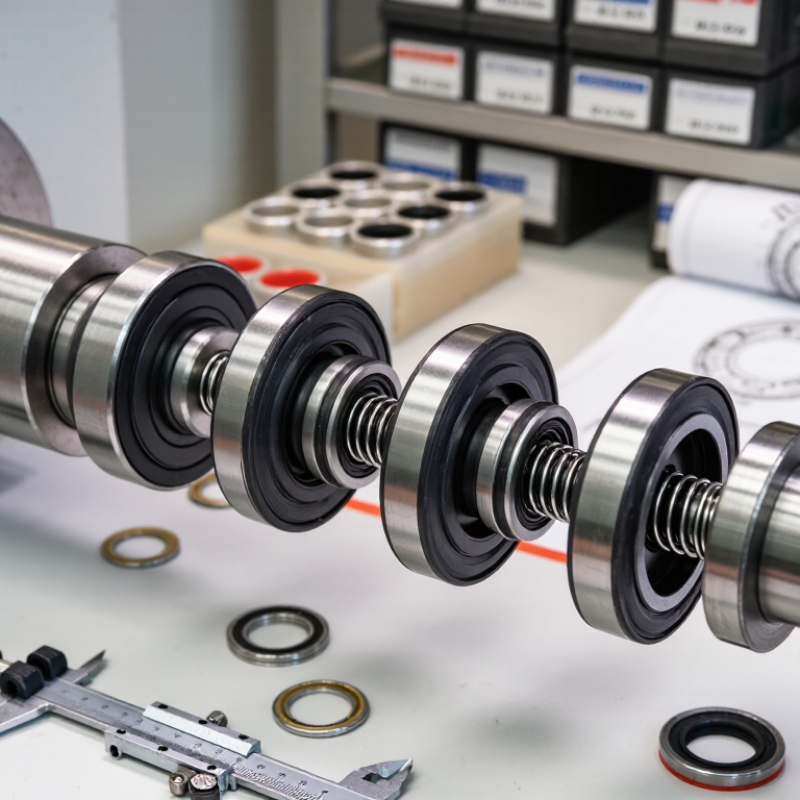
A double lip oil seal uses two sealing edges on one elastomer body. The primary lip retains oil inside a bearing or gearbox. The secondary lip blocks dust, water, and fine metal particles from entering. A garter spring keeps the primary lip pressed against the rotating shaft.

During rotation, the lip forms a thin oil film instead of scraping the shaft completely dry. This film reduces friction and limits heat. The space between both lips can hold a small amount of grease, but excessive grease may increase temperature. Installation matters greatly. A scratched shaft can defeat a new seal within hours.

Grand View Research’s 2024 Seals Market analysis estimates the global market near USD 13 billion in 2023, with annual growth of about 6% through 2030. That expansion reflects demand from automotive, industrial, and rotating equipment applications. Still, market growth does not guarantee longer service life. Seal performance depends on shaft hardness, runout, temperature, lubricant compatibility, and correct lip orientation.

In field maintenance, reversed installation remains common. The oil-retaining lip must face the lubricant. That detail is easy to miss. ISO 6194-1 also emphasizes dimensional accuracy and sealing performance, yet real failures often begin with rough handling or poor surface preparation. Manufacturers should therefore control elastomer quality, spring tension, lip geometry, and inspection records rather than relying only on catalog dimensions.
Key Factors for Evaluating Double Lip Oil Seal Manufacturers

2026 Top Double Lip Oil Seal Manufacturers?

Choosing a double lip oil seal manufacturer requires more than comparing catalog prices. Look for proven experience with rotating shafts, high temperatures, dust, and oil exposure. Ask how the supplier controls rubber compounds, spring tension, and sealing lip geometry. A reliable manufacturer should provide material certificates, dimensional reports, and batch traceability. Small details matter. A seal that looks correct may still fail under shaft misalignment.

Evaluate testing methods before accepting production claims. Check whether samples undergo leakage, heat aging, pressure, and endurance tests. Ask for test conditions, not only pass results. Technical drawings should show shaft diameter, housing fit, lip direction, and allowable runout. Strong manufacturers also explain why a material suits mineral oil, synthetic fluid, or contaminated environments. Customization is useful, but unnecessary changes can increase risk. I have found that clear communication often reveals more than polished brochures.

Tips: Request several samples from one production batch. Inspect the sealing lip with magnification. Confirm hardness, spring material, and storage limits. Review response times for technical questions. A factory audit can expose weak cleanliness controls. Do not judge quality from price alone. Delivery promises should include realistic tooling and inspection time. No supplier is perfect, so record limitations before signing an agreement.

2026 Comparison of Leading Double Lip Oil Seal Manufacturers

The 2026 comparison of leading double lip oil seal manufacturers should begin with measurable performance, not catalogue size. Grand View Research estimated the global industrial seals market at about USD 14 billion in 2023, with steady growth through 2030. This expansion reflects tighter requirements in automotive, agricultural, hydraulic, and rotating equipment applications.

Manufacturers generally fall into three practical groups. High-volume producers focus on standardized NBR seals, automated inspection, and competitive pricing. Engineering-led suppliers offer FKM, ACM, PTFE, and customized lip profiles for heat, chemicals, or high shaft speed. Regional specialists may provide faster delivery and technical support, but their laboratory capacity can be uneven. That difference matters.

A double lip seal needs more than two visible edges. The primary lip controls oil, while the outer lip blocks dust and water. Buyers should compare radial load, pressure resistance, shaft roughness, temperature range, and tested leakage rates. ISO 9001 certification supports process control, but it does not prove seal life. Automotive-focused facilities may also hold IATF 16949 certification, which indicates stronger production discipline.

MarketsandMarkets reports continued demand for sealing products from transportation and industrial machinery sectors, although published forecasts differ by research method. That uncertainty deserves attention. A supplier claiming “long life” without test conditions offers weak evidence. Ask for test speed, lubricant type, temperature, and cycle duration. Field experience shows that installation damage can defeat an excellent seal. This point is often underreported. The best 2026 comparison therefore weighs verified testing, material traceability, tooling control, and responsive failure analysis alongside unit price.

Materials, Designs, and Industries Served by Top Manufacturers

2026 Top Double Lip Oil Seal Manufacturers?

The strongest manufacturers combine material science with application testing. Nitrile rubber suits standard mineral oils and moderate temperatures. Fluorocarbon rubber handles higher heat, aggressive fluids, and demanding chemical exposure. Polytetrafluoroethylene reduces friction, but it needs careful installation. Acrylate rubber fits many high-temperature automotive applications. The design also matters. A primary lip retains lubricant, while the second lip blocks dust, water, and abrasive particles. Metal cases improve rigidity. Garter springs maintain lip pressure during shaft movement. According to Grand View Research’s 2024 industrial seals report, automotive and industrial machinery remain major demand sectors. These findings support selecting suppliers with sector-specific testing, not only large production capacity.

Tips: Ask for compound data, shaft-speed limits, temperature ranges, and batch traceability. Confirm performance through ISO-based dimensional checks and leakage testing. A seal that looks identical may perform differently.

Industries served include electric motors, pumps, gearboxes, agricultural equipment, construction machinery, and automotive hubs. In dusty fields, a stronger external lip can protect the primary seal. In high-speed motors, excessive lip pressure may create heat and shorten service life. The U.S. Department of Energy reports that compressed-air leaks can waste 20–30% of compressor output, showing how small sealing failures can create measurable losses. Oil seals do not cause every efficiency problem, but they deserve closer inspection. One weakness remains common: buyers often choose by price before reviewing fluid compatibility, surface roughness, and installation tools. That shortcut can become expensive.

2026 Top Double Lip Oil Seal Manufacturers? - Materials, Designs, and Industries Served by Top Manufacturers

Anonymized capability and application matrix for comparing double lip oil seal manufacturing segments
Manufacturer Capability Segment Common Material Families Typical Double-Lip Design Typical Temperature Range Primary Operating Media Typical Industries Served Key Manufacturing and Validation Focus Common Reference Standards
High-volume general-purpose production NBR; selected ACM compounds for higher heat resistance Molded elastomer seal with a primary oil lip, auxiliary dust lip, garter spring, and metal reinforcement case Approximately −40°C to +100°C for NBR; up to approximately +150°C for suitable ACM compounds Mineral oils, lubricating greases, and common hydraulic fluids within compound limits Automotive components, electric motors, pumps, gearboxes, and general machinery Dimensional consistency, spring retention, lip geometry, press-fit performance, and leakage testing ISO 6194 series; DIN 3760; application-specific customer specifications
High-temperature powertrain and industrial equipment ACM; FKM for broader chemical and thermal resistance Two-lip design with high-temperature elastomer, controlled lip interference, and heat-resistant spring and case treatments Approximately −20°C to +150°C for ACM; approximately −20°C to +200°C for many FKM compounds Hot engine oils, transmission lubricants, synthetic oils, and selected aggressive fluids Automotive powertrain, industrial gear drives, compressors, and high-temperature rotating equipment Thermal aging, fluid immersion, shaft-surface compatibility, torque, and high-speed endurance ISO 6194 series; DIN 3760; elastomer and fluid compatibility specifications
Heavy-duty contamination-resistant production NBR, HNBR, and polyurethane for selected abrasion-resistant applications Reinforced two-lip seal with a pronounced auxiliary dust lip, robust outer diameter, and optional protective coating Approximately −30°C to +120°C, depending on elastomer and lubricant Gear oils, greases, hydraulic oils, mud, dust, water splash, and abrasive contaminants Construction equipment, agricultural machinery, mining equipment, axles, and off-road vehicles Dust exclusion, abrasion resistance, shaft runout tolerance, eccentricity control, and field durability ISO 6194 series; DIN 3760; equipment-specific endurance test methods
Chemical and synthetic-fluid compatible production FKM; PTFE-based sealing elements for demanding chemical or low-friction applications Low-friction primary lip with auxiliary exclusion lip; designs may use stainless reinforcement or energizing elements Approximately −20°C to +200°C for FKM; PTFE designs may operate at substantially higher temperatures depending on construction Synthetic lubricants, fuels, solvents, chemical fluids, and high-temperature oils where compatibility is confirmed Chemical processing, energy equipment, fuel systems, compressors, and specialized industrial machinery Chemical immersion, friction and wear, thermal cycling, material traceability, and leakage under pressure differentials ISO 6194 series; DIN 3760; chemical compatibility and customer qualification protocols
Low-temperature and flexible-equipment production Silicone rubber; specialized low-temperature NBR compounds Flexible two-lip profile with low-temperature lip elasticity and an auxiliary environmental barrier Approximately −60°C to +180°C for suitable silicone compounds; actual oil compatibility must be verified Selected lubricating oils, greases, dry environments, and low-temperature service media Cold-climate equipment, instrumentation, appliances, electric motors, and specialty machinery Compression set, low-temperature flexibility, dimensional stability, and compatibility with the specified lubricant ISO 6194 series; DIN 3760; low-temperature and lubricant-compatibility testing
Low-friction and high-speed rotating equipment PTFE; filled PTFE blends; FKM for elastomeric alternatives Hydrodynamic primary lip, auxiliary dust lip, and low-friction surface treatment or filled polymer construction Approximately −60°C to +260°C for many PTFE designs; application limits depend on speed, pressure, and compound Oils, fuels, solvents, dry-running conditions, and selected aggressive fluids High-speed motors, pumps, compressors, aerospace-related equipment, and precision machinery Friction torque, heat generation, shaft finish, pressure capability, wear, and dynamic leakage performance ISO 6194 series; DIN 3760 where applicable; application-specific dynamic seal testing
Food, beverage, and hygienic-equipment production FDA-compliant silicone, EPDM, or PTFE-based materials when the formulation and design are approved for the application Cleanable two-lip geometry with reduced crevices, corrosion-resistant hardware, and material traceability Approximately −50°C to +180°C, depending on the approved material, cleaning chemicals, and operating cycle Food-grade lubricants, water, washdown fluids, cleaning agents, and selected process media Food processing, beverage filling, pharmaceutical equipment, packaging, and sanitary pumps Cleanability, non-contamination, corrosion resistance, batch traceability, and documentation of approved compounds ISO 6194 series; DIN 3760 where applicable; FDA 21 CFR 177.2600 or relevant regional requirements
Electric motor and bearing-sealing production NBR, FKM, and low-friction PTFE options for specialized motor applications Low-torque primary lip with auxiliary dust lip, spring-loaded or springless depending on speed and lubrication conditions Approximately −40°C to +150°C for common elastomer solutions; higher temperatures require specialized materials Bearing greases, electric motor oils, dust, humidity, and light water splash Electric motors, generators, fans, pumps, appliances, and rotating electrical equipment Low friction, noise control, shaft finish, concentricity, grease retention, and long-duration speed testing ISO 6194 series; DIN 3760; motor and bearing application test specifications
Custom-engineered and small-batch production NBR, HNBR, ACM, FKM, EPDM, silicone, polyurethane, and PTFE selected according to the medium and temperature Customized lip angles, spring materials, case geometry, dust-lip profiles, coatings, and installation features Commonly approximately −60°C to +260°C across the material range; final limits require application validation Mineral and synthetic oils, greases, water, fuels, chemicals, refrigerants, and dry-running environments where suitable Robotics, renewable-energy equipment, laboratory machinery, specialty vehicles, marine systems, and process equipment Design verification, prototype testing, material certificates, reverse engineering, dimensional inspection, and application-specific endurance tests ISO 6194 series; DIN 3760; customer drawings, industry specifications, and validation protocols
Data note: Temperature ranges are typical guidance values for commonly used compounds, not universal ratings. Actual performance depends on formulation, shaft speed, pressure, lubricant, shaft surface, installation quality, and exposure time. Double lip oil seals generally use an inner sealing lip for lubricant retention and an outer auxiliary lip for dust or moisture exclusion.

How to Select the Right Double Lip Oil Seal Manufacturer in 2026

Selecting a double lip oil seal manufacturer in 2026 requires more than comparing unit prices. Start with application data: shaft diameter, housing bore, speed, temperature, pressure, lubricant, and contamination level. A capable manufacturer should ask for these details before recommending a profile. That behavior signals engineering discipline. It also reduces trial-and-error purchasing. Ask how the sealing lip retains oil and blocks external dust. Small geometry changes can affect friction, heat, and service life. Request material data for the elastomer, spring, and case. Avoid vague terms such as “premium rubber.” Start with data.

Evidence matters. Review dimensional inspection records, batch traceability, process controls, and documented test methods. Relevant testing may include leakage, torque, aging, immersion, and rotational durability. Ask whether test conditions reflect your equipment, not just laboratory convenience. Request samples from normal production, then inspect fit and lip flexibility. A supplier should explain nonconforming product handling and corrective actions clearly. Communication speed matters when a seal fails unexpectedly. Yet a fast reply cannot replace technical proof. Ask for samples.

Compare suppliers by total operating risk, not the lowest quotation. Examine tooling ownership, replacement consistency, packaging, lead times, and emergency capacity. Confirm whether drawings and revisions are controlled. In field evaluations, failures sometimes come from shaft damage or installation errors, not seal design. A reliable manufacturer should investigate those causes without shifting blame immediately. Manufacturers can make mistakes. Ask for a response plan when samples fail or dimensions drift. Keep records. Include test results, approved materials, and communication history. This may feel excessive. It often prevents repeated failures.

2026 Guide to Selecting a Double Lip Oil Seal Manufacturer

Material capability is a practical starting point when evaluating manufacturers. The chart compares typical continuous service-temperature limits for common oil-seal materials; actual performance depends on compound formulation, shaft speed, pressure, lubricant, and application design.

How to use this chart: Select manufacturers that can provide the material, dimensional accuracy, sealing-lip design, testing, and documentation required for your operating temperature and lubricant conditions.