Choosing the right High Temp Gasket Sealant manufacturer requires more than comparing product prices or temperature ratings. In 2026, buyers need reliable evidence, practical experience, and clear technical documentation. This guide introduces leading manufacturers serving automotive, industrial, chemical processing, energy, and equipment maintenance markets.
A dependable manufacturer should explain curing behavior, temperature limits, chemical resistance, storage life, and application methods. Product data sheets matter. So do test results. Experienced suppliers often describe surface preparation, bead size, curing time, and common installation errors. These details can prevent leaks around engine covers, exhaust flanges, pumps, ovens, and heated pipe joints.
Real applications reveal more than attractive claims. A sealant may withstand high temperatures but fail under vibration, oil exposure, pressure changes, or repeated thermal cycling. That weakness deserves attention. This overview therefore considers manufacturing experience, quality control, technical support, certifications, and customer feedback. It also recognizes an unavoidable limitation: published performance may not match every operating environment. Independent testing remains wise.
The selected manufacturers are assessed through practical, transparent criteria rather than promotional language. Their formulations, production capabilities, documentation, and industry reputation receive careful review. Readers can use this information to compare suppliers and identify products suitable for specific service conditions. Safety instructions and manufacturer recommendations should always guide final selection. Reliable sealing begins with accurate data, suitable materials, and realistic expectations.

High-temperature gasket sealants are gap-filling materials used between flanges, covers, pipes, and engine housings. They support sealing when metal surfaces are slightly uneven or exposed to vibration. Common chemistries include silicone, anaerobic, ceramic, and inorganic silicate formulations. Each cures differently.
A silicone sealant cures into a flexible rubber-like layer. It handles thermal expansion and repeated movement well.
Anaerobic sealants cure where oxygen is absent, usually between tightly fitted metal surfaces. Ceramic and silicate systems form a harder, heat-resistant barrier. They are useful near exhaust paths, furnaces, and combustion equipment, but they may tolerate movement poorly.
The mechanism is simple, but selection is not.
Heat accelerates aging, oxidation, and joint movement. A sealant rated for 1,000°F may still fail under pressure, chemicals, or rapid thermal cycling.
ASTM F37 testing helps measure leakage through gasket materials, while ASTM F104 provides a framework for comparing gasket properties. These standards do not replace application testing.
Grand View Research valued the global sealants market at approximately USD 13.1 billion in 2023 and forecast continued growth through 2030. That broader figure includes construction and automotive products, so it does not represent high-temperature sealants alone. MarketsandMarkets has also identified automotive, energy, and industrial equipment as major demand sectors.
In practical testing, a small bead should remain continuous around bolt holes and corners. Surface oil can destroy adhesion. This is often underestimated. Cure time, flange pressure, joint clearance, and thermal cycling deserve equal attention. Manufacturer claims are useful, but field conditions can be less forgiving.
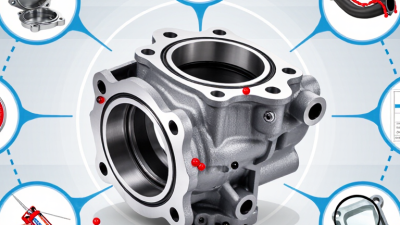
High-temperature gasket sealant performance depends on more than a high temperature rating. The sealant must resist heat cycles without becoming brittle, shrinking, or losing adhesion. A dependable material keeps contact with metal, glass, or ceramic surfaces during expansion and contraction. That stability helps prevent narrow leaks around flanges, covers, and exhaust connections.
Chemical resistance is equally important. Oils, coolants, steam, and combustion residues can attack a weak seal. During maintenance inspections, I have seen residue collect beside a gasket after only a few operating cycles. That detail matters. Flexible sealing, strong adhesion, and low shrinkage should work together. A sealant that survives heat but fails under vibration is not a reliable solution.
Cure behavior also affects real performance. The product should cure at a predictable rate under the workshop’s temperature and humidity conditions. Too fast can be troublesome. Too slow can delay assembly and invite contamination. Surface preparation remains critical: remove oil, rust, and old sealant, then apply a continuous bead with controlled thickness. Testing should include thermal cycling, pressure exposure, and chemical contact when possible. One honest limitation remains: laboratory results cannot represent every joint design. Small gaps, uneven flanges, and rushed preparation still create weak points.
| Performance Dimension | Typical Performance Range | Why It Matters | Common Evaluation Method | Selection Consideration |
|---|---|---|---|---|
| Continuous Service Temperature | Approximately 200–315°C (392–599°F), depending on chemistry | Indicates the temperature the cured sealant can generally withstand during extended operation. | Manufacturer technical data; thermal aging and heat-exposure testing | Use the continuous rating rather than the short-term peak rating for ongoing service conditions. |
| Short-Term Temperature Resistance | Approximately 300–370°C (572–698°F) for limited exposure | Helps the seal tolerate temporary temperature spikes during start-up, shutdown, or process excursions. | Controlled oven exposure or thermal cycling | Confirm the allowable duration and whether pressure is present during the temperature excursion. |
| Temperature Cycling Stability | Designed to tolerate repeated heating and cooling when correctly applied | Reduces cracking, shrinkage, embrittlement, and loss of sealing caused by thermal expansion and contraction. | Thermal cycling followed by leak inspection and adhesion assessment | Match the sealant's flexibility and modulus to the movement of the joint. |
| Chemical Resistance | Varies by formulation; common targets include oils, fuels, water, glycols, and many industrial fluids | Prevents softening, swelling, dissolution, or loss of adhesion when exposed to process media. | Immersion or spot-exposure testing with mass, volume, hardness, and adhesion measurements | Check compatibility with the exact fluid, concentration, temperature, and exposure time. |
| Pressure-Sealing Capability | Application-dependent; suitable ratings may range from low-pressure covers to pressurized assemblies | Determines whether the cured material can prevent gas or liquid leakage under operating pressure. | Pressure decay, hydrostatic, pneumatic, or helium leak testing | A sealant should not be used as a substitute for an engineered gasket in high-risk pressure systems unless specifically qualified. |
| Adhesion to Substrates | Typically formulated for metals such as aluminum, steel, stainless steel, and cast iron | Strong adhesion helps maintain the seal during vibration, pressure changes, and thermal movement. | Peel, lap-shear, pull-off, or qualitative adhesion testing after aging | Surface cleanliness, roughness, oxidation, and use of primers can significantly affect adhesion. |
| Flexibility and Joint Movement | Ranges from rigid, high-temperature pastes to flexible elastomeric sealants | Allows the seal to accommodate dimensional changes without tearing or losing contact. | Elongation, tensile testing, compression-set testing, and movement cycling | Rigid inorganic products may withstand higher temperatures but generally provide less movement capability. |
| Cure Mechanism and Cure Rate | Moisture-cure, heat-cure, anaerobic, or solvent-evaporation systems; cure time varies from minutes to several days | Controls installation speed, handling time, and when the assembly can be returned to service. | Tack-free time, depth-of-cure, hardness development, and full-cure testing | Consider bead thickness, humidity, temperature, ventilation, and whether the joint is enclosed. |
| Gap-Filling Capacity | Formulation-specific; commonly used for small flange irregularities and surface imperfections | Helps compensate for scratches, machining marks, minor warpage, and flange surface unevenness. | Controlled-gap sealing and leak testing | Large gaps may require a formed gasket, shim, backing material, or mechanical redesign. |
| Shore Hardness After Cure | Approximately Shore A 20–80 for elastomeric products; higher values are possible for rigid systems | Provides an indication of resistance to indentation, compression, and deformation. | ASTM D2240 or an equivalent hardness method | Choose hardness together with flexibility; a harder seal is not automatically a better seal. |
| Extrusion and Slump Resistance | Dependent on rheology, bead size, cure state, and installation orientation | Maintains bead position on vertical, overhead, or irregular flanges before and during assembly. | Sag, slump, flow, and extrusion-rate testing | Select a suitable viscosity for manual application, automated dispensing, or vertical joints. |
| Vibration and Shock Resistance | Varies from rigid, vibration-sensitive materials to flexible systems designed for dynamic assemblies | Reduces the risk of fatigue cracking and leakage in engines, pumps, compressors, and machinery. | Vibration endurance, cyclic loading, and post-test leak inspection | Evaluate joint movement, bolt preload, operating frequency, and thermal cycling together. |
| Electrical and Thermal Conductivity | Usually electrically insulating; thermal conductivity depends on fillers and formulation | Affects electrical isolation, heat transfer, sensor performance, and thermal management. | Electrical resistance and thermal conductivity testing | Verify whether the application requires insulation, heat dissipation, or controlled conductivity. |
| Storage Life and Application Stability | Often approximately 6–24 months in sealed original packaging, subject to product specification | Maintains predictable viscosity, cure behavior, and sealing performance before use. | Accelerated aging, viscosity checks, and cure-performance comparison | Follow the specified storage temperature, humidity limits, container orientation, and first-in-first-out practice. |
| Application Temperature Range | Commonly about 5–40°C (41–104°F), with product-specific limits | Determines whether the material can be applied and cured reliably under site conditions. | Application trials at minimum and maximum recommended temperatures | Cold surfaces, condensation, excessive heat, and high humidity can change cure speed and adhesion. |
| Compliance and Safety Profile | May include VOC, emissions, flammability, food-contact, or industry-specific requirements | Supports regulatory compliance and safe use in industrial, automotive, food-processing, and energy applications. | Safety Data Sheet, technical documentation, and applicable ASTM, ISO, UL, or regional requirements | Verify the exact certification and intended-use approval for the installation environment. |
Note: Performance values are representative industry ranges. Actual limits depend on formulation, joint design, substrate preparation, curing conditions, pressure, chemical exposure, and service duration.
In 2026, high-temperature gasket sealant manufacturers fall into three practical categories: silicone specialists, anaerobic sealant producers, and inorganic or ceramic compound makers. Each serves a different temperature range, curing condition, and equipment requirement.
Silicone products
often support flexible joints and thermal cycling.
Anaerobic grades
suit close-fitting metal flanges.
Ceramic formulations
target furnaces, exhaust systems, and extreme heat zones.
Product development is becoming more evidence-driven. Grand View Research estimates the global sealants market will reach about USD 103 billion by 2030, supported by automotive, construction, and industrial demand. MarketsandMarkets also identifies improved thermal resistance and faster curing as key development trends.
Leading manufacturers now test compression recovery, chemical resistance, and long-term aging. Digital batch tracking improves reliability. However, laboratory results can mislead when surface contamination, vibration, or uneven torque appears in the field. That weakness deserves more attention.
Tips: Compare service temperature with continuous operating temperature, not the advertised peak. Request test data using your actual substrate and joint gap. Check curing time at realistic humidity. A small pilot test can prevent a costly shutdown. Do not treat one impressive data sheet as complete proof.
When comparing high-temperature gasket sealant manufacturers, start with tested performance, not catalogue temperature claims. The U.S. Department of Energy’s Industrial Decarbonization Roadmap reports that process heating uses 51% of manufacturing energy in the United States. A seal failure in these systems can cause leakage, downtime, and repeated maintenance.
Ask each manufacturer for complete test results. Check continuous temperature ratings, short-term peak resistance, compression recovery, and chemical compatibility.
ASTM F37 can help assess sealability, while ASTM F146 evaluates resistance to fluids. ISO 9001 certification supports process control, but it does not prove gasket performance.
Request batch traceability, cure-condition records, and samples tested with your actual flange material.
Look deeper.
Practical experience matters. A reliable supplier should explain surface preparation, bead size, cure time, and storage limits. Compare results after thermal cycling, not only fresh laboratory tests. Check whether data covers vibration, pressure changes, and contact with oils, fuels, or coolants.
Some suppliers publish impressive maximum temperatures but omit strength loss after prolonged exposure. That omission deserves questions. Independent laboratory reports add credibility, especially when they identify test methods and sample conditions. I would also examine technical support response times and warranty terms. They are not glamorous, but field problems rarely follow catalogue assumptions. My own caution: a higher temperature rating may still indicate a poorer choice if curing is slow or rework becomes difficult.
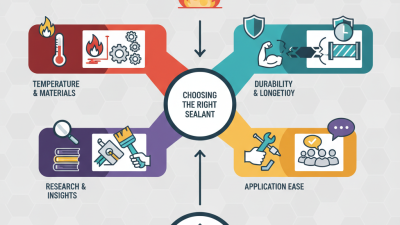
Selecting the right manufacturer starts with the application, not the catalog. A furnace flange, exhaust manifold, and chemical pump need different sealing behavior. Check continuous temperature, peak temperature, pressure cycling, chemical exposure, and cure time. A product rated for 350°C may tolerate only short peaks. That distinction matters.
The U.S. Department of Energy reports that process heating represents about one-third of manufacturing energy use. Poor sealing can increase heat loss, emissions, and maintenance interruptions. The broader adhesives and sealants market exceeded USD 80 billion in 2024, according to Fortune Business Insights. This growth creates more choices, but not always better decisions. Manufacturers should provide traceable test data, batch controls, technical support, and clear application limits. ASTM, ISO, or equivalent test references add confidence, although testing rarely matches every plant condition. A datasheet is evidence, not proof. Real validation remains necessary.
Tips: Ask for thermal cycling data, not only maximum temperature. Test a small flange assembly under actual pressure and chemicals. Inspect cure behavior at the planned bead size. Also check storage life and technical response time. These details are easy to overlook. They can decide whether a seal survives one shutdown or several years. Selection teams should also question attractive claims that lack test methods, sample conditions, or failure criteria. That extra skepticism may feel slow, but rushed sealant choices often create repeat maintenance work.