A Double Lip Oil Seal is a compact rotary seal designed to control lubricants around a rotating shaft. Its two sealing lips create separate contact zones. One lip retains oil inside the housing. The other helps block dust, water, and fine abrasive particles from entering. This simple arrangement supports cleaner lubrication and longer bearing or gearbox service life.
Dr. Robert M. Flitney, author of Seals and Sealing Handbook, writes, “The primary function of a seal is to prevent leakage.” That principle explains the purpose of every Double Lip Oil Seal, but real performance depends on more than the lip design. Shaft finish, hardness, installation accuracy, temperature, oil type, and rotational speed all matter. A seal can look correct and still fail early.
The details are practical. Imagine a rubber lip pressing gently against a polished shaft. Too much pressure creates heat and wear. Too little pressure permits leakage. Contamination can act like sandpaper. A damaged spring may reduce sealing force.
This article will explain the structure, working principle, materials, applications, advantages, limitations, and selection factors of a Double Lip Oil Seal. It will also address common installation mistakes. Some descriptions may seem straightforward. They are not always. Actual service conditions can challenge even a carefully selected seal. Reliable results come from matching the seal to the shaft, lubricant, environment, and maintenance plan.
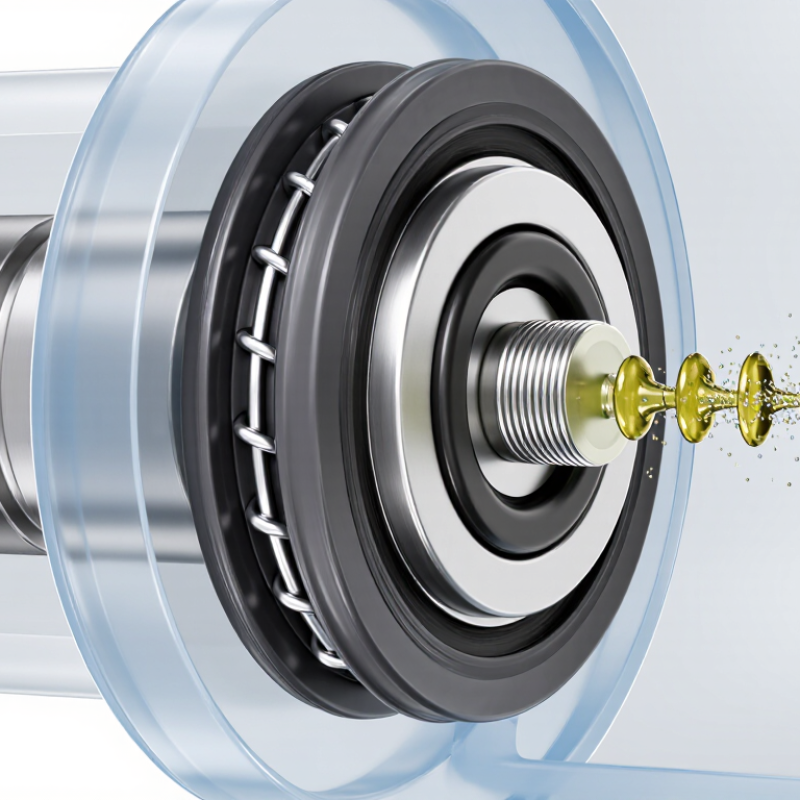
A double lip oil seal is a rotary shaft seal with two flexible sealing lips. The primary lip faces the lubricant, while the secondary lip faces dust, water, and outside contaminants. A spring usually maintains contact around the rotating shaft. The space between both lips normally holds grease during installation. Its basic function is controlled separation: retain oil inside and limit contamination outside. ISO 6194-1 defines this seal family as a lip-type sealing device for rotary shafts. That matters because “double lip” describes the arrangement, not unlimited pressure resistance. It is simple.
In service, the inner lip manages the oil film at the shaft surface. The outer lip acts as a secondary barrier, especially in dusty or splash-prone equipment. A 2024 oil-seals market assessment by Mordor Intelligence estimates the sector at about USD 12.1 billion. It projects roughly 4% annual growth through 2029. This growth reflects broad use in vehicles, gearboxes, pumps, and industrial motors, not proof of longer seal life. Field checks remain decisive. Technicians should inspect shaft wear, lip direction, grease quantity, and installation damage. Even a correct seal can leak when the shaft has a groove or excessive runout. I would not treat the outer lip as a guarantee against water ingress. Design assumptions still need testing.
What Is a Double Lip Oil Seal?
A double lip oil seal uses two sealing lips within one compact housing. The primary lip retains lubricant around a rotating shaft. The secondary lip blocks dust, water, and fine abrasive particles from the outside. Between them, a narrow air space or grease pocket improves contamination control. Small details matter here. A spring-loaded garter spring maintains radial contact as the elastomer relaxes. The seal case supports the lip and helps control installation depth. Many designs also include a flexible diaphragm, which absorbs shaft runout and thermal movement.
According to ISO 6194, radial shaft seals require controlled lip geometry, suitable materials, and defined installation conditions. These factors directly affect leakage and service life. Industry market data from Grand View Research identifies automotive and industrial equipment as major oil-seal demand sectors, where compact rotating assemblies are common. In practical inspections, a polished contact track on the shaft often reveals excessive lip pressure or poor lubrication. A lip that is too tight may generate heat. A loose lip may leak quickly.
Material selection should match temperature, fluid chemistry, shaft speed, and surface finish. Nitrile rubber suits many mineral oils, while fluoroelastomer handles higher temperatures and aggressive fluids more reliably. The choice is not automatic. Engineers should verify it against the manufacturer’s test data and ISO requirements. One design weakness is often overlooked: the dust lip may trap contaminated grease against the primary lip. That can shorten seal life, even when the dimensions appear correct.
| Key Component | Primary Function | Common Material Options | Structural Design Considerations | Typical Operating Notes |
|---|---|---|---|---|
| Primary Sealing Lip | Retains lubricating oil inside the housing and helps prevent external leakage along the rotating shaft. | Nitrile rubber, hydrogenated nitrile rubber, fluoroelastomer, or other application-specific elastomers. | The lip has a flexible sealing edge that contacts the shaft with controlled radial interference. Its geometry must balance sealing pressure, friction, heat generation, and wear. | Designed mainly for fluid retention on the oil side of the seal. |
| Secondary Dust Lip | Helps block dust, dirt, water spray, and other contaminants from entering the bearing or gearbox area. | Usually the same elastomer as the primary lip, although the compound may be optimized for abrasion and environmental resistance. | Located toward the external environment and normally separated from the primary lip by a small cavity. The clearance and contact force must avoid excessive drag while maintaining contamination protection. | The space between the lips may be left dry or filled with a compatible grease, depending on the application design. |
| Garter Spring | Maintains circumferential contact pressure between the primary sealing lip and the shaft as the elastomer relaxes or wears. | Commonly oil-resistant spring steel or stainless steel for corrosive or humid environments. | The spring is fitted into a molded groove around the primary lip. Correct spring tension supports sealing without creating unnecessary friction and temperature rise. | Usually associated with the oil-sealing lip rather than the outer dust lip. |
| Metal Case or Reinforcement | Provides dimensional stability, supports the elastomer, and helps the seal maintain its shape during installation and operation. | Typically formed steel; stainless steel may be selected where improved corrosion resistance is required. | The case may be fully or partially encapsulated by elastomer. Its geometry affects press-fit retention, rigidity, and resistance to installation distortion. | The case is not normally intended to contact the rotating shaft. |
| Outer Diameter Sealing Surface | Seals the stationary interface between the oil seal and the housing bore. | Elastomer-covered metal, bare metal with a controlled finish, or a rubber-coated outer surface. | The outside diameter must provide the specified interference fit with the housing. Surface condition, bore tolerance, and seal alignment influence leakage resistance. | Damage, scratches, excessive bore wear, or incorrect interference can cause oil leakage around the outside diameter. |
| Seal Heel and Flexing Zone | Allows the sealing lip to accommodate shaft movement, runout, and small changes in operating conditions. | Flexible elastomer selected for temperature, oil compatibility, and dynamic fatigue resistance. | The heel must provide adequate flexibility without allowing the lip to invert, fold, or lose contact under pressure or shaft movement. | Insufficient flexibility can increase wear; excessive flexibility can reduce sealing stability. |
| Shaft Contact Edge | Creates the dynamic sealing interface with the rotating shaft. | Elastomer sealing edge; the shaft surface is commonly hardened or treated according to the equipment design. | A suitable shaft finish, hardness, roundness, and runout are essential. Excessive roughness may abrade the lip, while an overly smooth surface may retain insufficient lubricant. | The contact area requires a compatible lubricant film to control friction and heat. |
| Lubricant Retention Groove or Pocket | Helps retain lubricant near the primary lip and supports stable operation during shaft rotation. | Molded elastomer geometry; the retained lubricant must be compatible with the seal compound. | The pocket should provide lubrication without allowing excessive grease migration toward the dust side or trapping abrasive contaminants. | Incorrect lubricant type or insufficient lubrication can accelerate hardening, wear, and heat-related failure. |
| Static Sealing Interface | Prevents leakage between the seal’s stationary outer surface and the housing. | Elastomer coating or interference-fit metal surface, depending on the seal construction. | The housing bore should be clean, properly sized, and free from burrs. Sealant may be used only when specified for the application and compatible with the seal material. | A loose housing fit can permit oil to bypass the seal even when the lip and shaft are in good condition. |
| Double-Lip Cavity | Separates the primary oil-retaining lip from the secondary contamination-exclusion lip. | Formed by the elastomer body and lip geometry. | The cavity provides functional separation between fluid retention and contamination protection. Its width and shape influence heat dissipation, lubricant retention, and debris accumulation. | A blocked or contaminated cavity can increase friction and may reduce the effectiveness of the secondary lip. |
| Overall Seal Body | Integrates the lips, spring, case, and outer sealing features into one compact rotating-shaft sealing assembly. | Elastomer bonded to or molded around a metal reinforcement, with material selected for the fluid and temperature range. | The body must accommodate housing dimensions, shaft speed, pressure, temperature, lubricant type, installation method, and expected contamination level. | Performance depends on the complete system, not only on the seal material or lip geometry. |
A double lip oil seal contains two flexible sealing lips around a rotating shaft. The inner lip faces the oil and usually includes a garter spring. This spring maintains contact as the rubber wears or the shaft moves slightly. The outer lip faces the environment. It helps block dust, water spray, and fine particles from reaching the inner seal.
During rotation, the primary lip forms a narrow contact line against the shaft. A thin oil film develops beneath this line. The lip’s angled edge and shaft motion guide much of the oil back toward the housing. This hydrodynamic action limits leakage without creating excessive friction. The secondary lip works differently. It acts as a shield rather than the main oil barrier. Grease between both lips can reduce dry rubbing and improve protection.
In practical inspections, a seal may look sound while leaking after installation. A scratched shaft, a reversed lip, or a dry running surface can cause this failure. Small details matter. The shaft surface should be smooth, clean, and free from sharp edges. Installers should lightly lubricate the sealing lip and check its direction before assembly. A double lip seal is not automatically better for every application. Extra friction can increase heat, and the outer lip may trap contaminated grease. I have found that real service conditions often matter more than the seal’s appearance. Temperature, shaft speed, pressure, and contamination should guide the selection.
What Is a Double Lip Oil Seal?
A double-lip oil seal uses two flexible sealing edges around a rotating shaft. The primary lip retains oil, while the outer lip blocks dust, water, and fine grit. Material selection controls heat resistance, chemical compatibility, friction, and service life.
Nitrile rubber, or NBR, remains a practical choice for mineral oils and moderate temperatures. Fluoroelastomer, or FKM, handles higher heat and aggressive fluids, but costs more. Silicone works well in cold conditions, although it may resist abrasion poorly. PTFE offers low friction and strong chemical resistance, yet its installation requires tighter dimensional control. Grand View Research valued the global industrial seals market at approximately US$12.6 billion in 2023, with continued growth projected through 2030. That figure includes many seal types, not only double-lip designs. It still shows why material engineering matters.
Manufacturing options include compression molding, injection molding, precision trimming, and post-molding grinding. A stamped carbon-steel case suits general equipment. Stainless steel is safer around moisture and corrosive cleaning fluids. Spring selection also matters. Too much preload increases heat and wear. Too little preload causes leakage. ISO 6194-1 provides dimensional guidance for rotary shaft seals, but real installations can still fail through shaft scratches or misalignment. The specification is not the whole answer.
Tips: Check shaft finish, lip direction, temperature, and lubricant compatibility before ordering. Do not judge quality by material name alone. A cheaper compound may be the wrong choice. Field inspection often reveals installation damage, not material failure.
A double lip oil seal uses two sealing edges around a rotating shaft. The inner lip retains oil or grease, while the outer lip blocks dust, water, and fine particles. A small grease-filled space often separates the lips. This design protects bearings and reduces contamination in demanding environments.
These seals are common in electric motors, gearboxes, pumps, agricultural equipment, wheel hubs, and industrial rollers. They work well where shafts rotate through dusty workshops, muddy fields, or areas exposed to light splashing. However, a double lip seal is not automatically suitable for high pressure. Excess pressure can deform the lips and cause early leakage.
Selection should begin with the shaft diameter, housing bore, and available width. Confirm the shaft speed and operating temperature as well. The sealing material must match the oil, grease, and cleaning fluids used in service. Common elastomers behave differently in heat, cold, and chemical exposure. Check shaft hardness, surface finish, and runout too. Small alignment errors matter.
Installation deserves equal attention. A scratched sealing lip may leak before the machine starts. Protect the lip from sharp keyways and coat it with compatible lubricant.
A selection chart helps, but it can create false confidence. Real operating conditions often differ from the catalog. I have seen a correctly sized seal fail because the shaft surface was overlooked. That detail is easy to miss.